Intelligent Chatbot Automation System
Intelligent Chatbot Automation System
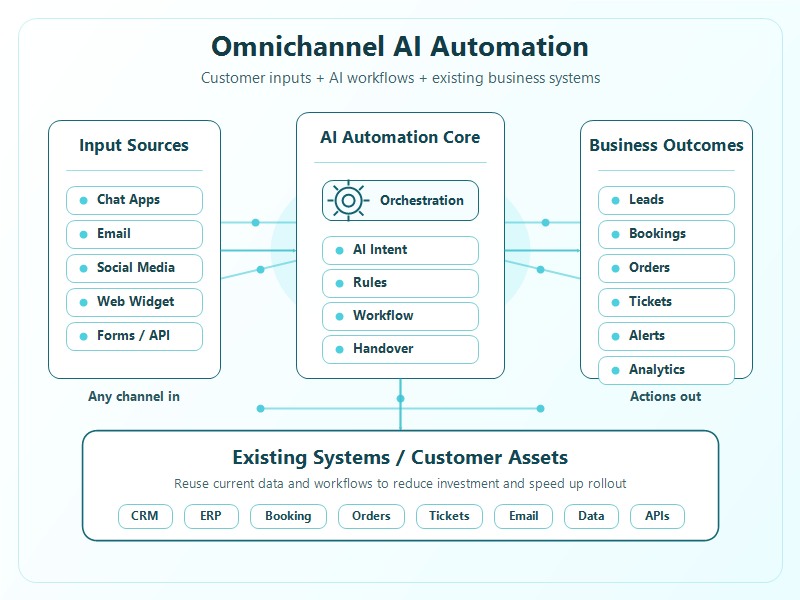
Our intelligent chatbot automation system connects customer conversations and inbound requests with real business operations. It does not limit enterprises to one messaging platform. WhatsApp, Telegram, website chat widgets, email, social media direct messages and comments, mobile apps, mini programs, forms, customer portals, Webhooks, APIs, and any IM platform that can expose a message gateway can become the customer entry point.
Behind the chat window, the system combines AI dialogue understanding + business rules + workflow automation + management dashboards. It can answer common questions, collect customer information, qualify leads, recommend appointment times, create orders, dispatch work, notify staff, update customers, and hand over to human agents when needed. The result is a closed loop from conversation to execution, not just a simple auto-reply bot.
The system is also designed to integrate with a customer’s existing digital assets. Instead of forcing a full platform replacement, it can connect to current CRM, ERP, booking, order, ticketing, email, spreadsheet, database, and internal admin systems through APIs, Webhooks, database synchronization, file exchange, email workflows, or custom connectors when needed. This helps enterprises reuse existing data, processes, and staff habits, reduce duplicated investment, and move from pilot to production faster.
Core Feature Highlights
- Omnichannel Input and Unified Message Center: Connects chat, email, social media messages and comments, website widgets, custom apps, mini programs, forms, Webhooks, APIs, and other interfaces into one message record and management center. Teams can filter by source, customer, session status, reference code, and follow-up state.
- Existing System Integration and Asset Reuse: Connects automation flows with current CRM, ERP, order management, booking, ticketing, email, spreadsheet, database, and internal systems. Where standard APIs are not available, S9FT TECH can evaluate Webhooks, database sync, file exchange, email parsing, RPA, or custom connectors to reduce rebuild cost and speed up implementation.
- AI Intent Recognition and Multilingual Replies: Understands customer intent such as consultation, booking, ordering, pricing, support, complaint, and follow-up. It can reply in Chinese, English, Malay, and other configured languages based on customer context.
- Lead Intake and Customer Profile Building: Captures name, phone, service interest, budget, preferred time, location, urgency, and other fields from natural chat. Leads can be routed to sales, consultants, or customer success teams for follow-up.
- Appointment Automation: Supports booking conversations inside chat, including service selection, location confirmation, preferred time understanding, recommended time slots, appointment confirmation, reminders, rescheduling, and cancellation flows.
- Order Creation and Dispatch Automation: Converts confirmed chat requests into orders, service jobs, or work tickets. The system can assign staff, notify assignees, show customer location, track status, and send completion updates.
- Human Handover and Live Chat: When a conversation requires judgment, pricing confirmation, professional advice, or complaint handling, staff can take over from the admin side while keeping the full chat history.
- Website Widget and Offline Follow-Up: Website visitors can start anonymous pre-chat, receive real-time replies, get unread badges, and continue later. When identity is required, the system can guide the user to a verified IM channel with a short reference code.
- Multi-Store, Multi-Role, and Multi-Tenant Control: Supports different branches, service locations, roles, permissions, customer ownership, audit logs, and tenant isolation, making it suitable for growing businesses and multi-location operations.
- Automation Reliability and Auditability: Tracks inbound and outbound messages, workflow status, retries, failures, manual interventions, and data changes so teams can review every step of the automation process.
Typical Application Scenarios
- Customer Service Automation: Answer repetitive questions about products, services, pricing, opening hours, store locations, delivery scope, and after-sales policies while keeping a route to human support.
- Sales Lead Intake: Qualify prospects through chat, collect requirements, identify urgency, schedule a sales consultation, and create follow-up tasks for the responsible team.
- Appointment Booking: Let customers book clinic visits, trial classes, maintenance appointments, consultations, or service sessions directly in chat without forcing them to browse a complex booking page.
- Order and Service Request Processing: Guide customers from inquiry to order confirmation, collect address or location, generate an order, assign staff, and notify customers when the job is accepted or completed.
- Operational Notifications: Send appointment confirmations, class reminders, dispatch updates, payment reminders, renewal prompts, order status changes, and service completion messages through the preferred chat channel.
- Email Inquiry Routing: Convert inbound emails into structured cases, leads, appointments, or support tickets, then route them to the right team with the original context preserved.
- Social Media Message and Comment Handling: Capture social DMs, post comments, campaign replies, and lead messages, then trigger qualification, response, handover, or follow-up workflows.
- Form and API Event Follow-Up: When a website form, landing page, partner system, or API event submits a request, the system can start the right automation flow and notify the responsible team.
- Existing System Workflow Extension: Keep the customer’s current CRM, ERP, booking calendar, order system, helpdesk, mailbox, spreadsheets, or internal database as the system of record while the robot collects information, triggers updates, and pushes structured actions into those existing tools.
Suitable Industries and Use Cases
- Retail and E-Commerce: Customers can ask about product availability, price, size, delivery, and promotions. The robot can guide cart confirmation, create orders, record purchase intent, and trigger repurchase reminders.
- Food and Beverage / Delivery: Restaurants, cafes, and food delivery teams can automate menu consultation, order collection, address confirmation, delivery updates, and customer feedback after completion.
- Local Services and Home Services: Cleaning, repair, installation, beauty, wellness, and other service providers can capture service requirements, collect photos or location details, prepare quotation information, dispatch technicians, and update job status.
- Clinics and Healthcare Services: Clinics, physiotherapy centers, dental clinics, chiropractic services, and wellness providers can automate appointment requests, location selection, available time recommendations, reminders, and follow-up messages. The robot collects appointment-related information only and does not replace professional diagnosis.
- Education, Training, Fitness, and Children’s Programs: Training centers, gyms, Pilates studios, tuition centers, and children’s fitness programs can handle course inquiries, trial class booking, class reminders, parent notifications, package balance reminders, and renewal follow-up.
- Automotive Services: Workshops, car detailing shops, fleet maintenance teams, and dealerships can automate service booking, repair progress updates, collection reminders, customer return visits, and after-sales support.
- IT Services and Enterprise Services: IT support companies, software vendors, cybersecurity teams, and managed service providers can receive issue descriptions, distinguish remote and onsite support, create service tickets, and route cases to technical specialists.
- Real Estate, Agencies, and High-Value Sales: Property agents, immigration consultants, training consultants, and B2B sales teams can qualify leads, collect budget and requirement information, arrange consultant appointments, and preserve follow-up history.
- Travel, Hospitality, and Ticketing: Hotels, tour operators, ticketing agencies, and experience providers can answer itinerary questions, collect booking intent, confirm details, send reminders, and handle after-sales questions.
- Logistics, Warehousing, and Delivery: Logistics teams can automate order tracking, delivery exception notices, proof-of-delivery communication, address clarification, and customer service ticket creation.
- Finance, Insurance, and Compliance Services: Advisors and service teams can collect preliminary information, route customers by product type, arrange consultant calls, send progress updates, and keep audit records. The system should not promise final financial, legal, or compliance conclusions without professional review.
- Government, Parks, Property, and Public Services: Property management, industrial parks, community services, and public service desks can automate visitor questions, repair reports, announcements, service requests, and internal ticket routing.
Business Value
The system helps enterprises reduce repetitive manual replies, shorten response time, improve lead conversion, standardize service processes, and keep every customer interaction traceable. Instead of asking staff to copy messages between chat apps, spreadsheets, email inboxes, CRM, ERP, and order systems, the robot turns conversations into structured business actions and lets the team focus on exceptions, decisions, and customer relationships. By reusing existing systems and data assets as much as possible, companies can avoid unnecessary replacement projects, lower implementation investment, and accelerate real-world rollout.